
The History of Rabbits as Pets
The transformation of rabbits from wild animals to cherished members of the household is a unique story that spans more than two thousand years. Unlike many companion animals, the rabbit’s journey from the wild to the living room was shaped by centuries of practical use, religious customs, and, eventually, a global movement to celebrate them as beloved pets. Let’s hop back in time and see how rabbits earned their place in our homes and hearts.
Ancient Origins and Early Domestication
Long before they found their way onto our laps, rabbits roamed the Iberian Peninsula, which includes what is now Spain and parts of Portugal. In fact, the country’s name is believed to have originated from the Phoenician phrase “I-sephan-im,” or “Land of the Rabbits.” The European rabbit, Oryctolagus cuniculus, would eventually become the ancestor of all domestic rabbit breeds.
The Romans were some of the earliest domesticators, valuing rabbits for both their meat and their soft fur. As early as the second century BC, Romans tried raising rabbits in walled enclosures. However, rabbits’ notorious digging abilities often turned these enclosures into little more than well-supplied burrows with a fence around them. While archaeological finds show that wild rabbits had been eaten in Spain and France for up to 20,000 years, managed breeding and true domestication efforts began much later.
Medieval Monastic Influence
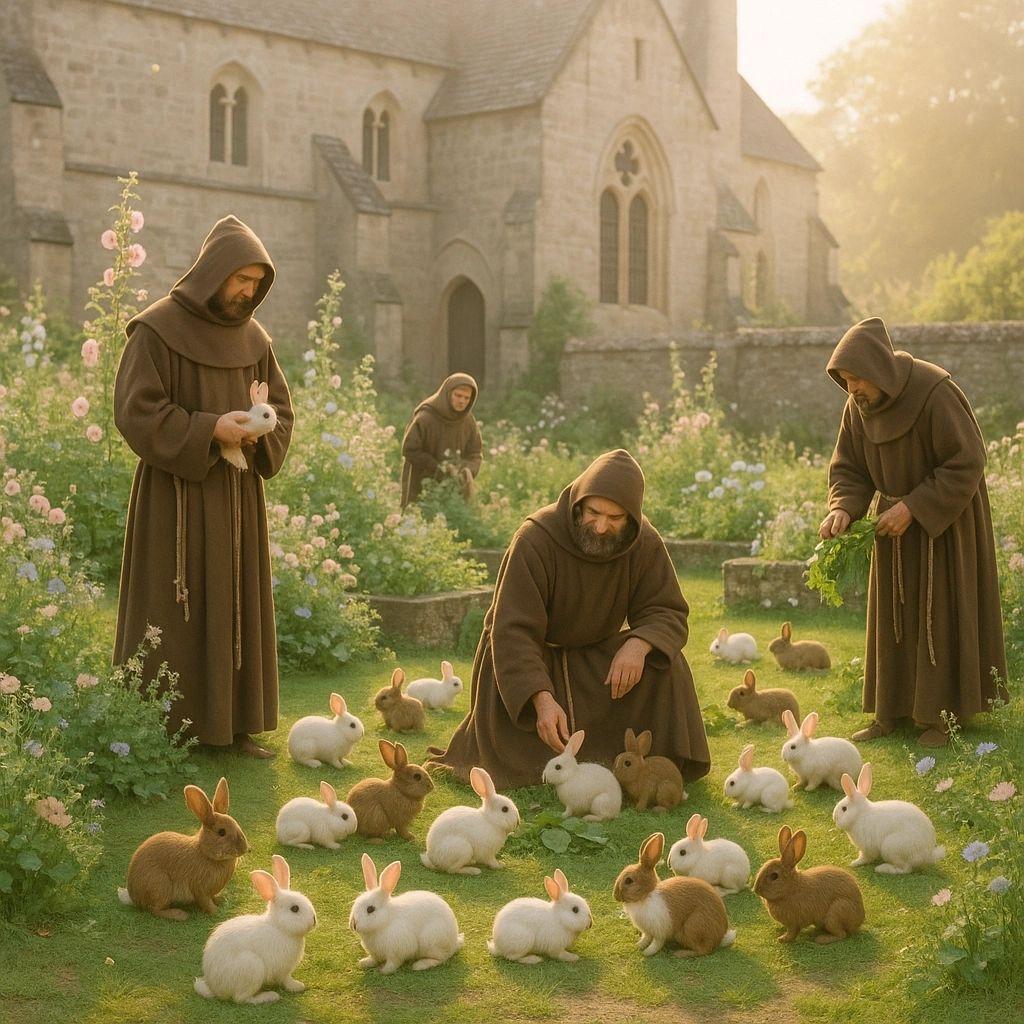
The Middle Ages brought a new wave of rabbit domestication across Europe, thanks in large part to the culinary creativity of medieval monks. Rabbits became important in monastic settings because of a loophole in church dietary rules: newborn baby rabbits, known as laurices, weren’t considered meat and could be eaten during Lent. This made rabbits a practical and sanctioned source of protein at times when most other meats were not allowed.
Monasteries began to selectively breed rabbits, both to increase their availability and diversify their appearance. Over time, these dedicated efforts resulted in the creation of new fur colors and patterns. During this period, the construction of large managed warrens—enclosed spaces for raising rabbits—spread across Europe, especially in France and England.
With human intervention, rabbits began to move far beyond their original habitat. After 800 AD, rabbit populations were deliberately released or translocated to new places, broadening their distribution.
Domestication Milestones and Morphological Changes
Unlike the dog or horse, the history of rabbit domestication is more recent and complex. Although humans kept and bred rabbits from the Roman era onwards, significant physical and behavioral differences between wild and domestic rabbits only became noticeable around the 18th century. DNA studies show that most of the world’s domestic rabbits descend from a population that was tamed in southern France during the last 1,500 years. This gradual process, known as the “directed pathway” of domestication, relied on persistent human effort rather than a single event or breakthrough.
By around 1500 CE, the domestication of rabbits was largely complete. However, it wasn’t until several centuries later that rabbits would finally become recognized companions rather than livestock.
From Livestock to Pet: The Victorian Pet Revolution
The real turning point for rabbits as pets came in the 1800s during the Victorian era. As the middle class grew and animal keeping gained popularity, Victorians developed a fascination with animal “fancy”—the breeding, showing, and keeping of animals primarily for pleasure and companionship rather than utility. Rabbit exhibitions and competitions became commonplace. Rabbits began to enter homes as companions instead of simply living in hutches or outdoor pens.
One of the most significant events of the time was America’s “Belgian Hare Boom,” which started with the arrival of Belgian Hares from England in 1888. The American Belgian Hare Association appeared soon after, and thousands of these rabbits were imported in just a few years. They were bred for their elegant, hare-like look and became the darlings of pet shows and fairs. However, their explosive popularity eventually waned, and today, Belgian Hares are considered rare, illustrating the fad-like nature of some early pet trends.
Early House Rabbits in Literature
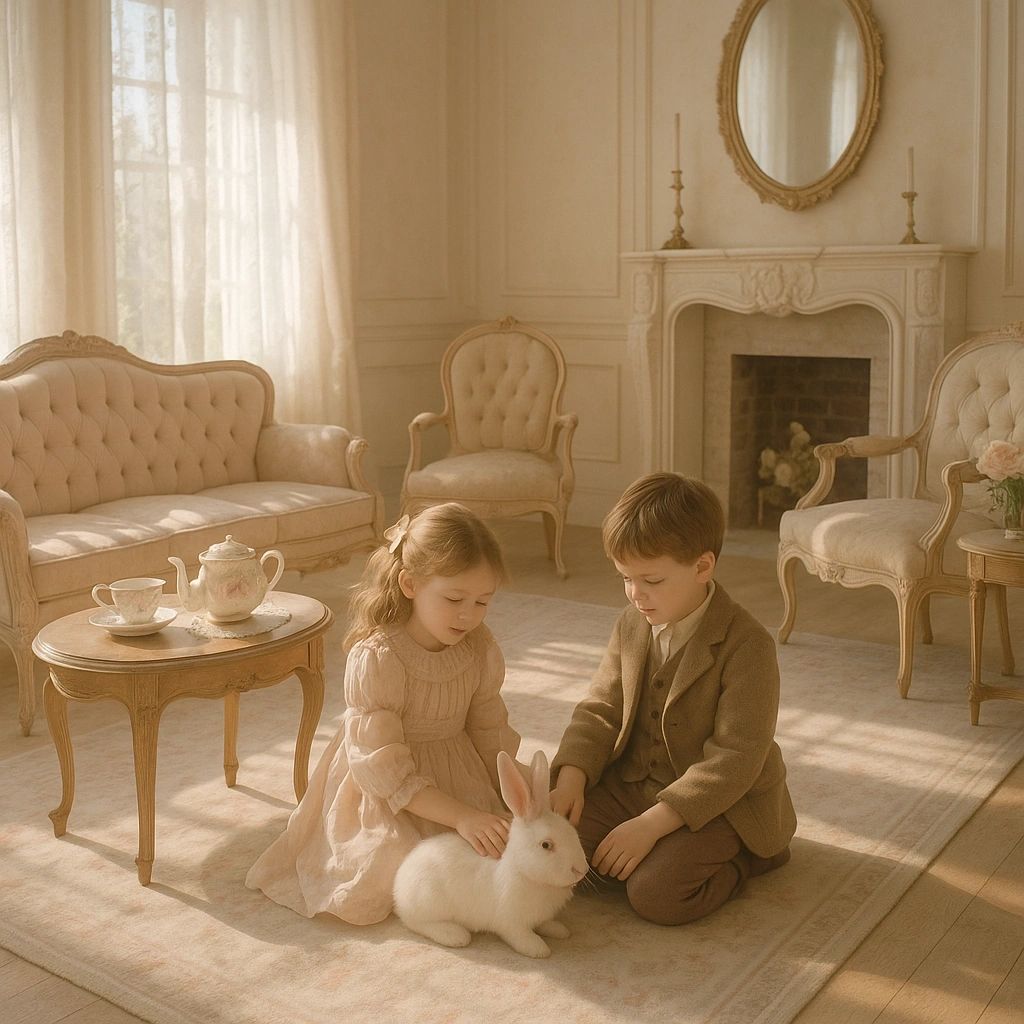
Some of the first written accounts of rabbits living truly indoors come from the diaries and letters of Beatrix Potter in the late 19th century. Potter, better known for her famous rabbit characters in children’s literature, also described how her real-life rabbits enjoyed the comforts of home, curling up near fires and finding cozy resting places indoors. Her descriptions provide some of the earliest glimpses into the affectionate, social bonds that can form between rabbits and their human caretakers.
The Modern House Rabbit Movement
For most of the 20th century, rabbits in many places remained outdoor pets or productive livestock. Their gentle nature, quiet personalities, and lack of strong odors set them apart from other small animals, making them a sensible choice for families and hobbyists. Still, it wasn’t until the 1980s that the idea of the house rabbit as a truly indoor, interactive companion began to gain widespread attention.
A pivotal moment in this shift was the publication of Marinell Harriman’s “House Rabbit Handbook: How to Live with an Urban Rabbit” in 1985. This practical guide detailed a new approach: treating rabbits less as backyard or barnyard animals and more as active family companions. Harriman’s advocacy paved the way for today’s rabbit rescue organizations, educational groups, and the rising trend of “house rabbits.”
This modern perspective embraces rabbits as intelligent, social animals capable of forming real bonds with people. Thanks to a better understanding of their health, nutrition, and behavior, living with an indoor rabbit is now more rewarding and accessible than ever for pet lovers.

Rabbits Today: Popular Pets Around the World
Today, all domestic rabbits trace their lineage to the European rabbit, but their roles and popularity continue to evolve. In some regions, rabbits are still kept primarily for agricultural purposes. In others, especially across North America and Western Europe, they have become one of the most adored and widely kept small pets.
Modern rabbit care emphasizes humane housing, diet, enrichment, and social needs. From playful mini lops to fuzzy lionheads, the diversity of breeds and personalities is astounding. Many owners now view their rabbits as important family members, seeking veterinary care, specialty grooming, and enrichment services to keep them healthy and happy.
If you’re feeling inspired to learn more about modern rabbit care and see how we welcome these long-eared companions at Fluff U, check out our Hopshire Bunnies experience.
Conclusion
The history of rabbits as pets is a story of adaptation, innovation, and growing affection. What began as a quest for food gradually became a movement for companionship, care, and appreciation. From ancient warrens and monastic gardens to Victorian parlors and modern living rooms, rabbits have hopped their way into human society in more ways than one. Their story is still being written by loving owners, pet professionals, and communities like Fluff U who are dedicated to celebrating all things soft, social, and undeniably adorable about rabbits.
If you have questions about rabbit grooming or want to share your own bunny’s story, don’t hesitate to visit our contact page—we’d love to connect.